
This Isn’t About Roads.
It’s about whether government listens to the people it’s supposed to serve. The comment period is closed, but the work isn’t over. Stay tuned to help protect our roadless forests.
Forest Service leadership is on the verge of rescinding the 2001 Roadless Rule.
Rescinding the rule will increase wildfire risk on national forest lands.
It’s a one-way ticket to opening up our roadless backcountry to reckless road building, logging, and industrialization.
By rolling back the 2001 Roadless Area Conservation Rule, the Forest Service is removing protections from 6.4 million acres in Montana.
These are the places we go every weekend. They’re where we hike, camp, hunt, fish, and ride. They give us clean drinking water. They support our families, communities, and jobs. 99% of people who commented want to keep the rule. Thousands turned out at meetings across the country, calling on Forest Service leadership to listen to us. Instead, the administration is selling out our national forests to private interests.
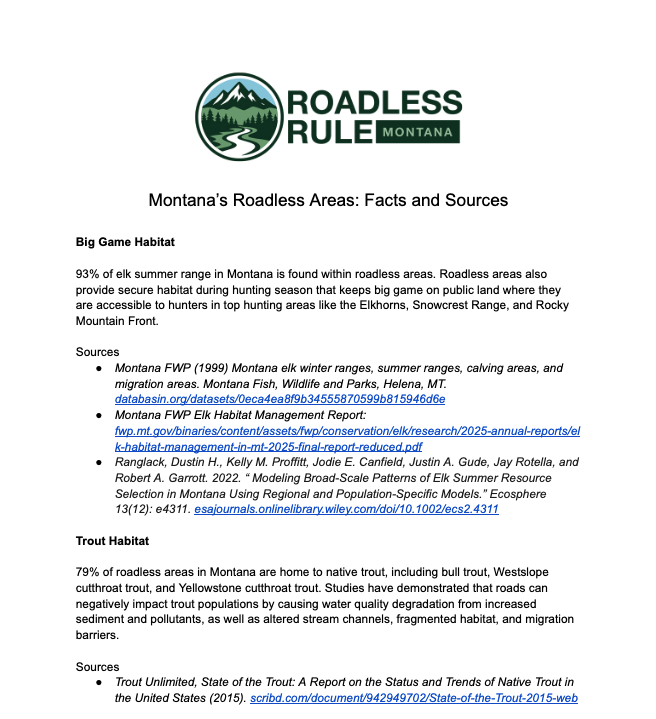
Montana’s Roadless Areas: Facts and Sources
Links to primary sources demonstrating how the Roadless Rule supports big game habitat, allows for active forest management, supports motorized use, and more.
Get the facts —>
On August 20, the Forest Service released a proposed rule and draft environmental impact statement to completely eliminate the Roadless Rule. Take a moment to tell the agency to put clean water, public safety, wildlife, and public access above private profits.
The comment period closed Oct. 6, but the work isn’t done. Stay tuned for more.